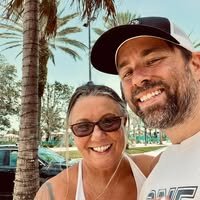
Geoff Storbeck profile photo

About Geoff

I build approachable, content-first interfaces as a freelance frontend developer based in Ormond Beach, Florida. My career spans web hosting, fintech, and offensive security, with a through-line of UI work that turns complex systems into clear workflows.

Most recently I led the frontend rewrite of Praetorian's Chariot platform, moving delivery from monthly releases to same-day deploys while building a React, TypeScript, and TailwindCSS architecture the team could extend quickly. At JPMorgan Chase I built the Cassandra as a Service UI and the Account Lifecycle Management UI, and I rewrote an embedded Angular 1 app into a standalone React and Redux application to lower onboarding friction and raise performance.

I run PageFoundry LLC, a small UI-focused consultancy, and I am currently building a graph database IDE with a team that connects to Neo4j, JanusGraph, Datastax, Kuzu, and RDF backends through a single interface. My day to day tools include React, TypeScript, HTML, CSS, and Vue when the product calls for it.

How I got here

It started at the kitchen table with a beige tower humming in the corner. I would dial into the library catalog from home and land in Dynix, the same screen the librarians used. The interface asked its questions in tidy rows. Type a title, hit enter, and it would hand back an aisle and a shelf like a set of coordinates.

The next day I would be back in the stacks with how-to-draw books under my arm, flipping pages that smelled like paper and dust. At night I went back to the catalog to explore the system. I found the jump address to the Library of Congress and spent time reading papers that felt out of reach for a kid in a small town. It felt official just to log in. I remember reading about Bin Laden after the U.S. embassy bombings in 1998 while he was climbing the FBI's most wanted list.

We finally had Windows 95, then Windows 98. A friend showed me you could right click a web page, save it, open the HTML in Notepad, and change it. I built the first versions by hand, then moved to FrontPage and went on a streak of half finished sites that never went anywhere. I did not have money for hosting, so nothing ever went live. I would finish one, admire it for a day, then delete it and start over because the building was the fun part.

That phase burned out and I slid into games. I picked up Legends of Might and Magic at Micro Center and spent my nights playing it. I got decent, climbed the ladders, then the hackers showed up and started shooting through walls. I called one out in chat and asked how he was doing it. He answered, then invited me onto IRC to talk more. He taught me mIRC scripting so I could greet people as they joined my room. He also showed me how to open the game files in a hex editor and change values like weapon strength, range, and walk speed. It was all client side logic. It was easy to open, easy to bend, and it made the machine feel knowable.

IRC felt like stepping into a room full of people who were smarter, weirder, and funnier than anyone I knew. The programmers I met there had the nerdiest humor I had ever heard and a kind of edge that felt cool from a distance. They traded the Anarchist Cookbook, listened to German techno, and dropped references that went over my head. I learned about 2600 from them and started trying to listen to Off the Hook out of New York whenever I could.

The same crowd kept talking about real programming and how Windows would never cut it. You needed free compilers like gcc, actual performance, endless customization. One day I burned the Red Hat Linux 7.3 ISOs, codename Seahorse, onto CDs and wiped the drive. I booted into the installer, partitioned the disk by hand, and watched it finish. When it dropped me at a bash prompt in GNOME, it felt like crossing a line I could not uncross.

The next few years were a blur of distro hopping. Red Hat to Fedora when it split off, then Mandrake because it felt friendlier, Debian for stability, Slackware to prove I could handle it, Gentoo when I wanted to compile everything from source. Desktop environments were the same obsession. GNOME, then KDE because it looked flashier, then down to lightweight setups like Fluxbox, Blackbox, Openbox, and IceWM.

I cared about the aesthetics as much as the tools. I would spend entire weekends tweaking my setup, changing terminal prompt colors to match the wallpaper, hunting down the perfect Fluxbox theme, making sure Firefox and GTK looked like they belonged together. Conky on the desktop, a weather applet in the corner, gDesklets, SuperKaramba, anything new from Freshmeat or the forums. I would post a fresh setup and wait for the clean comments to roll in. Everything had to match, feel cohesive, like the machine was an extension of my mood that month.

High school was a small Catholic school, so the computer offerings were basic. No Cisco track, no lab stacks. They did have programming classes, and I signed up for every one. I breezed through them and loved it. The teacher could tell I was ahead from messing around at home, so he gave me extra challenges and let me run with my own projects. We ended up becoming friends. I would hang out after class, talking shop and showing him random Linux tricks.

Senior year, the big project was Dreamweaver. He was supposed to teach it the next year but did not feel confident yet, so he had me learn it inside and out, then teach it back to him. I demoed features, walked him through layouts, explained how to export clean code instead of the bloated defaults. It was a blast. It was my first real taste of teaching tech to someone else.

Graduation came with a reality check. No money for a four year school and my grades were not Ohio State material. The plan was Columbus State Community College, get an associate's in computer science, then transfer to OSU. CSCC was close, affordable, and had a decent program with programming classes, sysadmin work, and web dev that was finally catching up to what I had been teaching myself.

Freshman year was a grind. I was taking a full load and keeping grades high for the transfer. Money was tight, so I took a part time job at a call center for Jumpline.com, a web hosting company in Columbus. It started as basic support, then escalated tickets, then outages, abuse reports, and security patches. I picked it up fast and started getting pulled deeper into the real work.

The job became my real education. Nights and weekends I was in the data center racking servers, configuring Cisco switches for VLANs, researching RAID setups, and writing bash scripts to automate migrations. I built tools for duplicating servers without downtime. I learned systems administration in production, not in a lab. That part time call center job stretched into a full systems admin role, and I had real experience on my resume before I finished the associate's.

Balancing full time school and a job that kept expanding was brutal. I would leave class, head straight to work, handle tickets until late, then try to cram homework into whatever hours were left. Sleep suffered, grades slipped, and I could feel the burnout building. I had to make a call. A degree would always be there, but real world experience in a growing hosting company was not guaranteed to wait.

I chose the job. I dropped classes, went full time at Jumpline, and kept climbing. The responsibilities grew fast. Data center migrations, internal tools, abuse and security work, projects that touched every server in the fleet. Every new challenge taught me more than a semester ever could, and the paycheck finally let me breathe. I told myself I would circle back to finish the degree someday when life slowed down. For now, the momentum was everything.

I was hooked.